


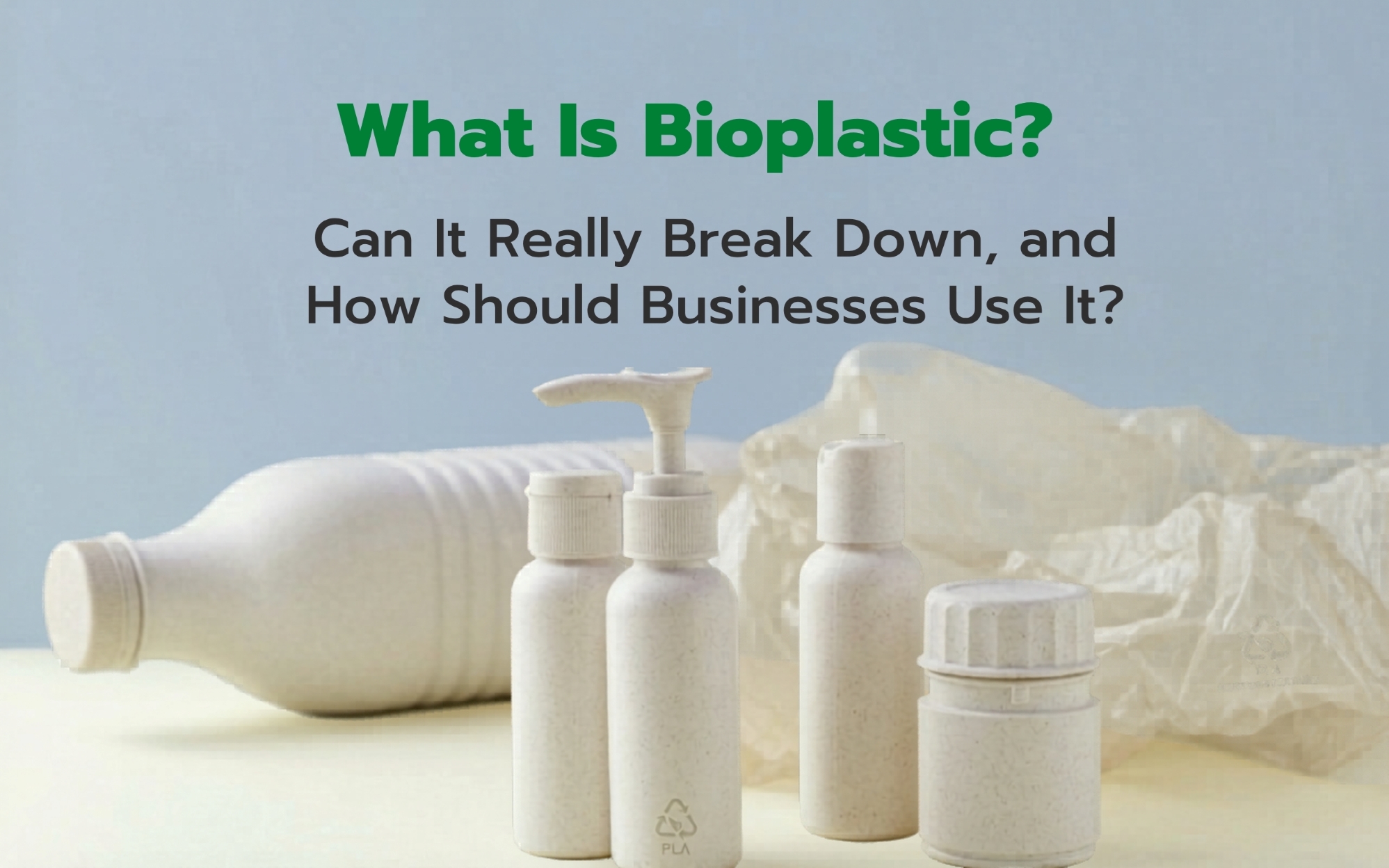
What Is Bioplastic? Can It Really Break Down, and How Should Businesses Use It?
As sustainability becomes more important for both businesses and consumers, bioplastic has become one of the alternative materials more often discussed in the packaging industry. But the key questions are: what is bioplastic, can it really break down, and is it suitable for every application?
The truth is that bioplastic is not a one-size-fits-all answer. Different types of bioplastic come with different benefits, limits, and end-of-life conditions. When used in the right way, they may help reduce dependence on fossil resources and support a company’s sustainability goals.
What Is Bioplastic?
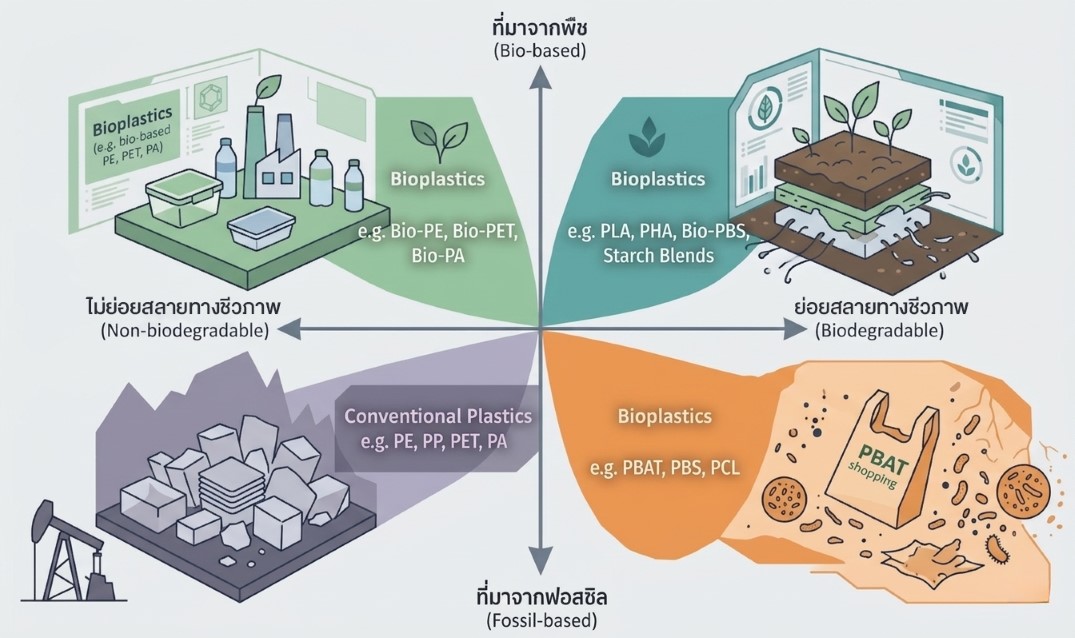
Bioplastic is a broad term used for two main groups of plastics: plastics made from biological resources, and plastics that can break down through biological processes. These two features are not always the same.
Bio-based Plastic
Bio-based plastic is made from renewable natural resources such as sugarcane, corn, cassava, or plant-based cellulose. Its main purpose is to reduce dependence on petroleum.
However, being made from plants does not always mean the material can naturally break down. For example, Bio-PET may partly come from plant-based raw materials, but its structure is still similar to regular plastic, so it should be recycled in the proper system.
Biodegradable Plastic
This type of plastic can break down through biological processes. Under the right conditions, microorganisms can turn the material into carbon dioxide, water, and biomass.
Materials such as PLA, PBS, or PHA may be able to break down, but in most cases they need the right system, such as industrial composting. This does not mean they will quickly disappear if thrown into nature.
A Simple Way to Understand It
- Bio-based = looks at whether the material comes from plants or renewable resources
- Biodegradable = looks at whether the material can break down biologically
- Compostable = looks at whether the material can break down in a composting system under specific conditions and standards
What Is Bioplastic Made From?
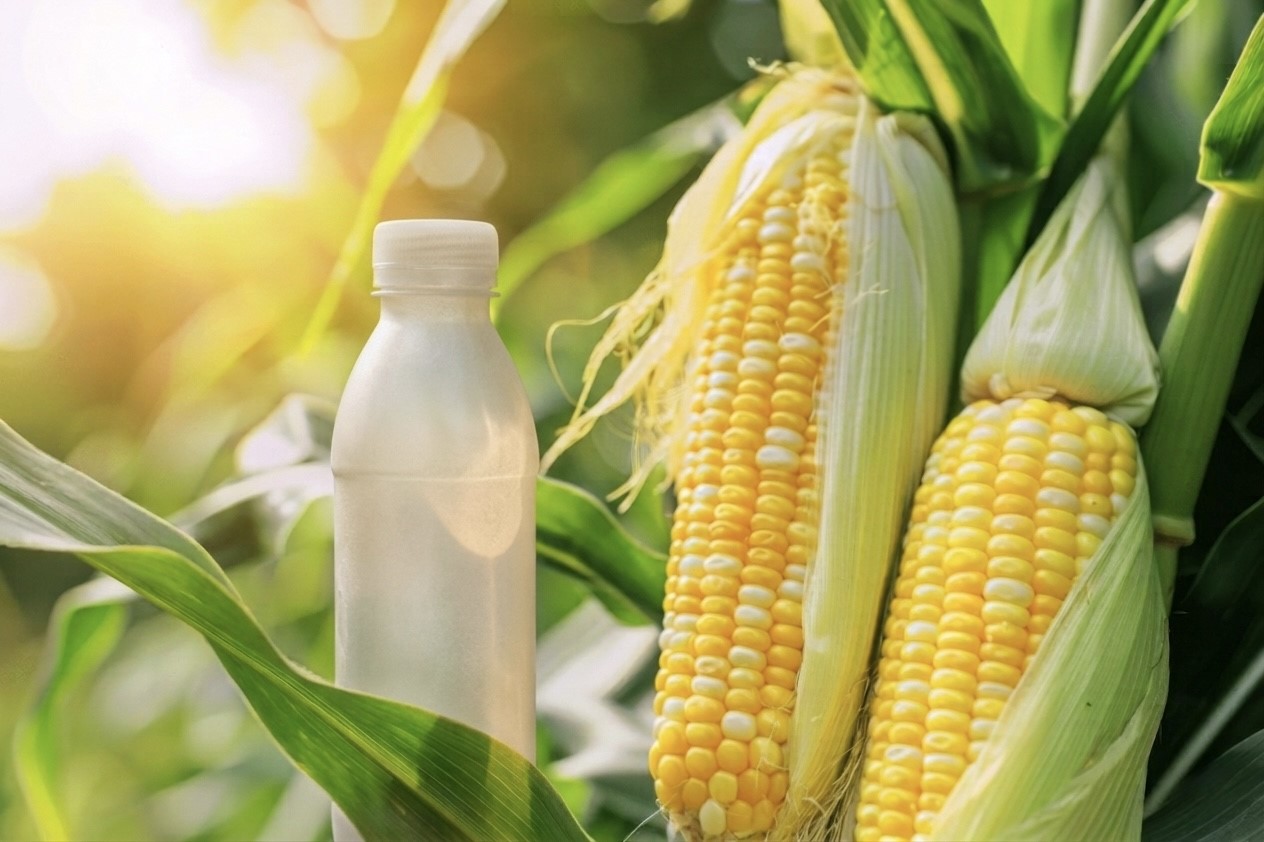
Bioplastic can be made from different types of raw materials. Common examples include:
- Food crops such as corn, sugarcane, and cassava
- Agricultural by-products such as rice straw, bagasse, or cellulose
- Microorganisms and algae, which are gaining more attention as newer technologies
- Petrochemical-based feedstock in the case of some biodegradable bioplastics, such as PBAT or PCL
Each raw material has different strengths and may affect cost, performance, and environmental impact.
Can Bioplastic Really Break Down?
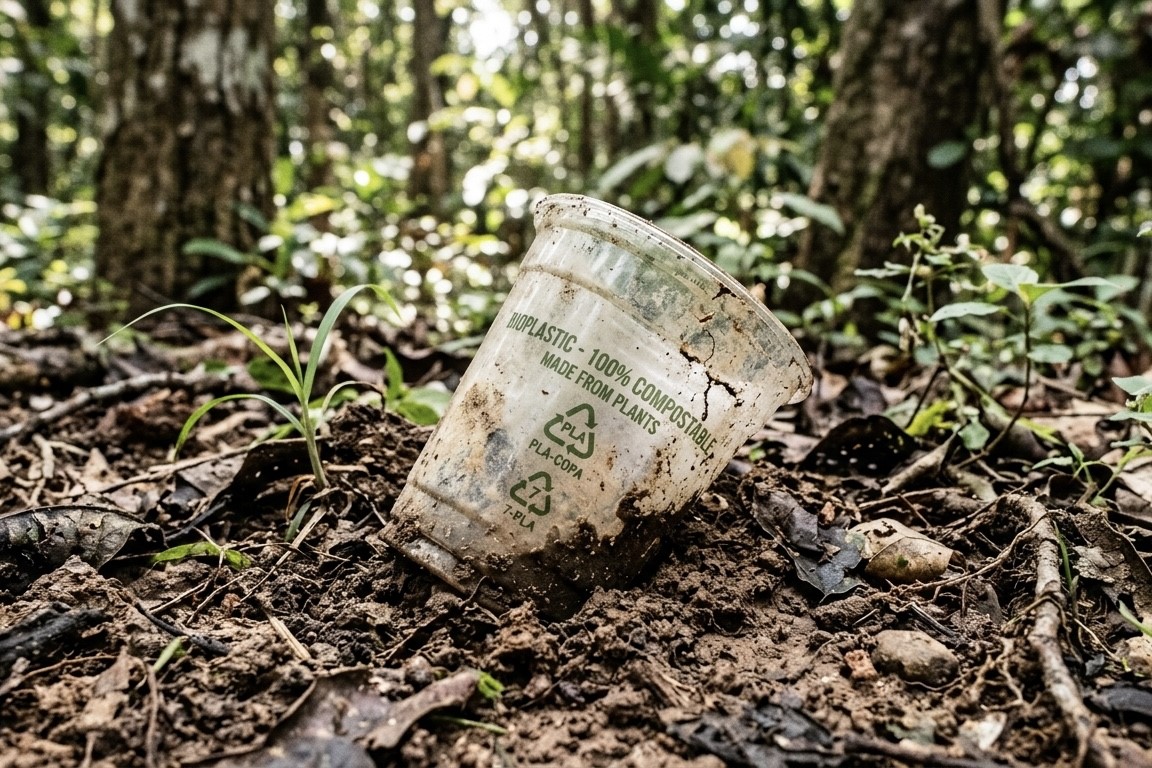
The answer is only some types can. And even then, they usually need the right conditions. It does not mean that every bioplastic will break down on its own when thrown into soil or nature.
Not Every Bioplastic Can Break Down
Bioplastic includes both bio-based and biodegradable materials, and these are not the same thing. For example, Bio-PET is made from plant-based feedstock, but it does not break down naturally. PLA or PHA may break down, but only under suitable conditions.
Breakdown Needs the Right Condition
Some plastics, such as PLA, usually need the right level of heat, moisture, and microorganisms. In many cases, this means an industrial composting system.
If Disposed of in the Wrong Condition, It May Act Like Regular Plastic
If the material is thrown away with general waste or ends up in landfill without the right conditions, breakdown may happen very slowly or not in any meaningful way.
Does Bioplastic Have a Lower Carbon Footprint Than Petroleum-based Plastic?
In many cases, bio-based bioplastics may have a lower carbon footprint than petroleum-based plastics, because they use plant-based feedstock that absorbs carbon dioxide while growing. However, this should not be treated as true for every material or every case. European Bioplastics says bio-based plastics can help reduce greenhouse gas emissions and dependence on fossil resources, but the real result depends on full life-cycle assessment, including production, transport, and end-of-life treatment. (European Bioplastics e.V.)
So if a business wants to evaluate environmental impact more accurately, it should also look at the material’s full Life Cycle Assessment (LCA) rather than only the raw material source. (European Bioplastics e.V.)
Common Misunderstandings About Bioplastic
Made from Plants Does Not Always Mean It Can Break Down
Some materials are bio-based but not biodegradable, such as Bio-PET or Bio-PE.
Biodegradable Does Not Mean It Will Break Down Anywhere
Many biodegradable materials still need the right composting or waste management system.
Compostable Is Not the Same as Recyclable
Some materials are suitable for composting systems, but that does not mean they can be recycled together with regular plastics.
Changing the Material Alone Does Not Always Mean Better Sustainability
Sustainability depends not only on the material itself, but also on packaging design, product use, and end-of-life management.
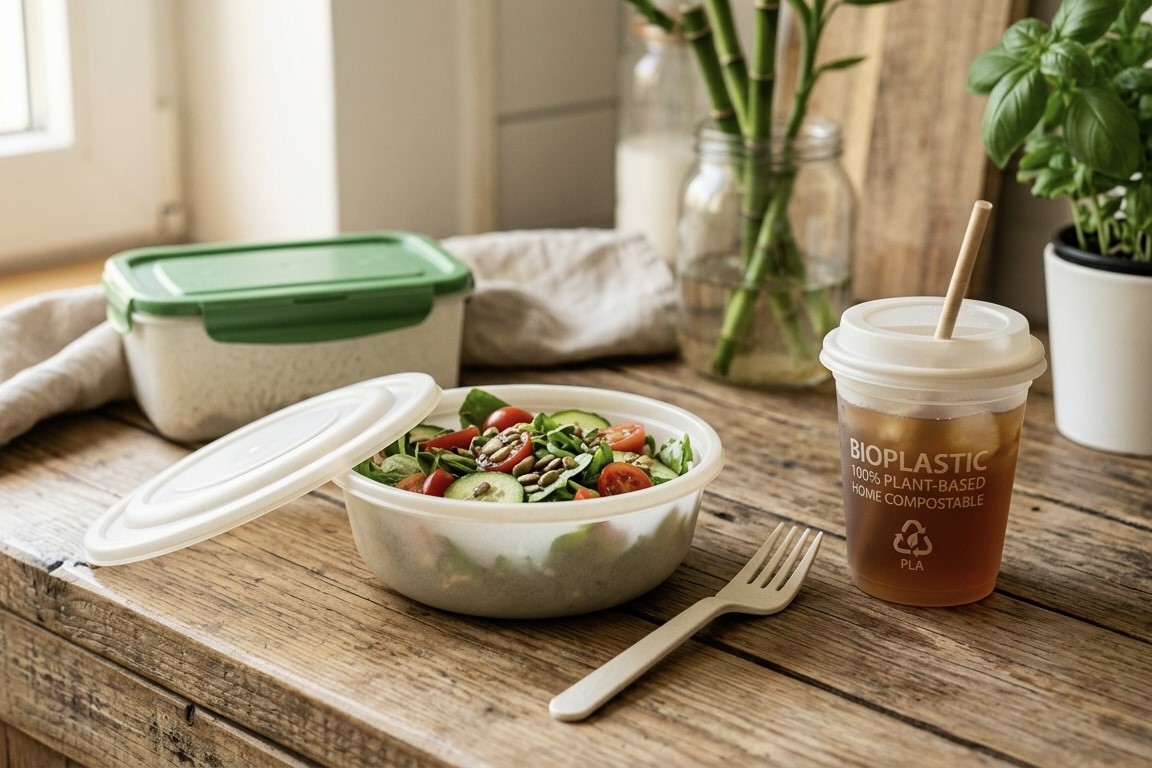
Examples of Bioplastic Applications
Bioplastic can be used in many kinds of packaging and products, such as:
- Cold drink cups, straws, and cutlery
- Food waste bags, carrier bags, and some film applications
- Some bottles or packaging for consumer goods
- Plant pots or lifestyle products made from bio-based materials
Whether bioplastic is suitable depends on both material performance and the waste system available after use.
Is Bioplastic Really Better?
Bioplastic may be a good option in some cases, but it is not the only answer for every situation. The right choice depends on function, cost, and end-of-life handling.
Benefits of Bioplastic
- May help reduce dependence on fossil resources
- May help lower carbon footprint in some cases
- Gives businesses more material options
- Can support sustainability goals and brand image
Limitations to Keep in Mind
- It usually costs more than regular plastic
- Some materials have limits in heat resistance, moisture resistance, or durability
- If there is no proper waste system, the environmental benefit may not happen as expected
- In some cases, there are concerns about agricultural resource use
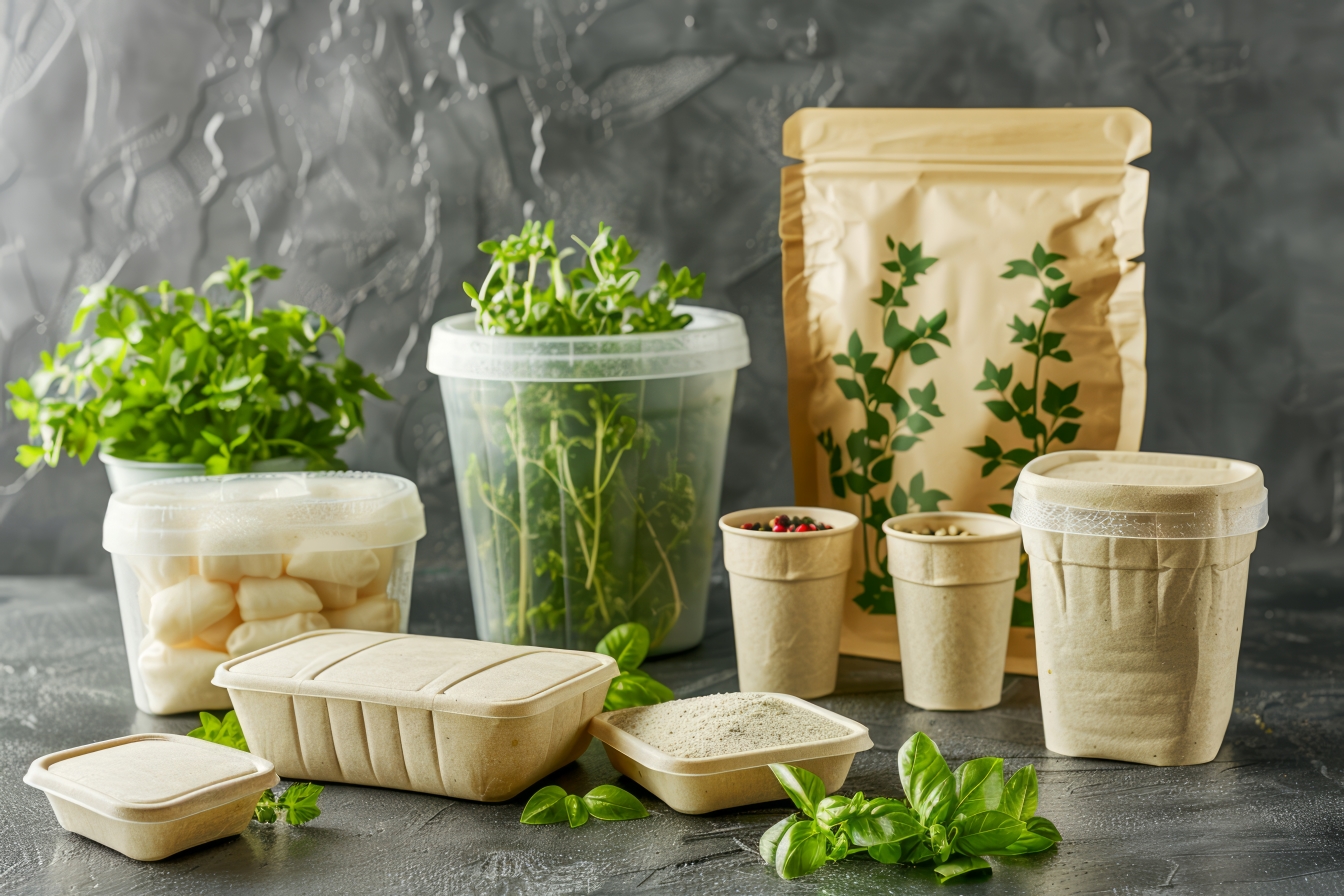
Who Is Bioplastic Suitable For?
Bioplastic is more suitable for some applications than others, especially where there is a clear end-of-life system or where regular recycling is difficult.
Examples include:
- Food and beverage businesses
- Brands that want packaging with a stronger sustainability message
- Some agricultural uses
- Businesses that want more alternative material options for their products
Bioplastic vs Regular Plastic: What are the Difference?
|
Topic |
Bioplastic |
Regular Plastic |
|
Raw material |
Plants or renewable resources |
Petroleum and natural gas |
|
Breakdown |
Some types can break down under the right conditions |
Does not biologically break down |
|
Carbon footprint |
In some cases may be lower |
Usually relies on fossil resources |
|
Durability |
Depends on the material type |
Usually broader in performance |
|
Cost |
Usually higher |
Usually lower |
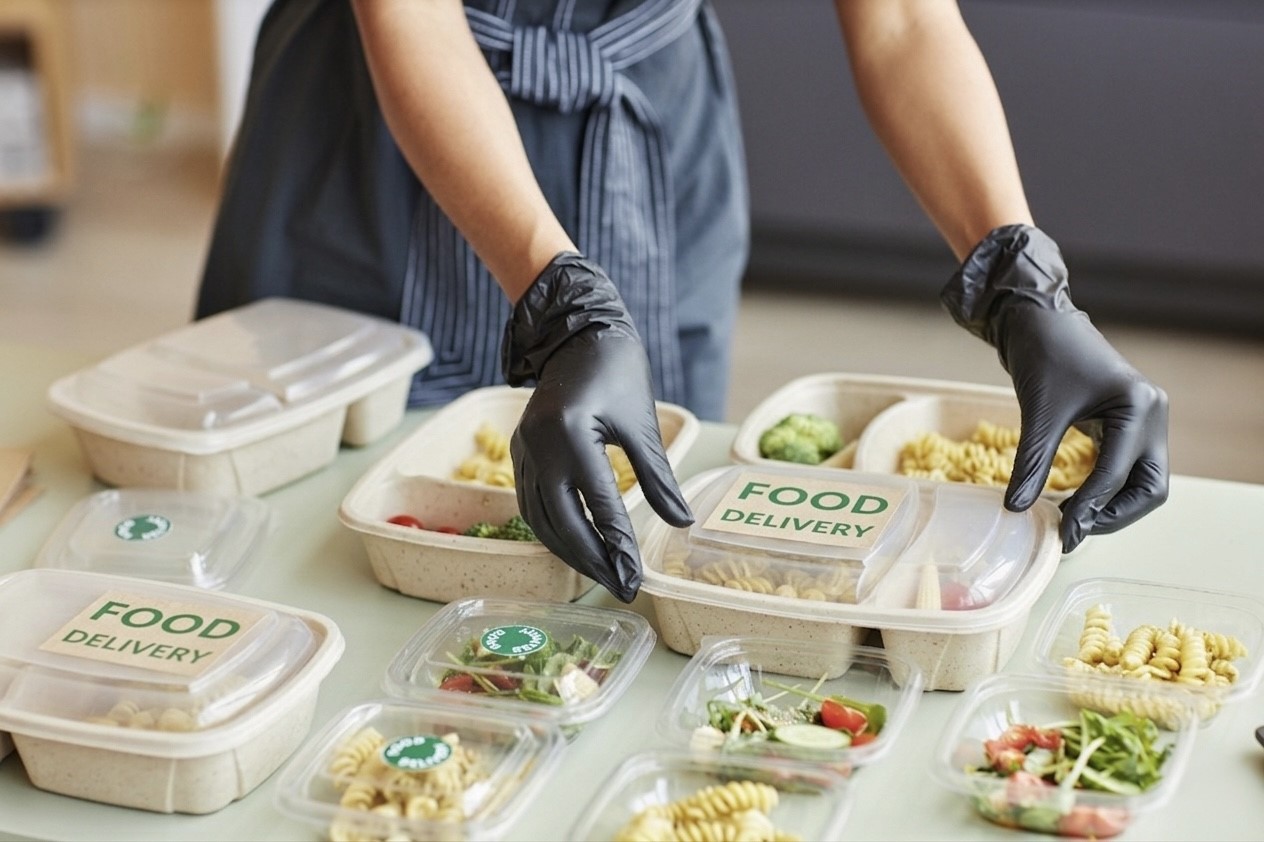
How to Choose the Right Bioplastic for Your Business
Bioplastic should not be chosen only because it sounds green or biodegradable. Businesses should look at both actual use and end-of-life handling.
1. Look at the Waste Destination
If a business can separate waste and send it into the right system, some bioplastics may create real benefits. But if the packaging always ends up in general waste, other materials such as Recycled PET (rPET), Recycled PP (rPP), or paper may be more suitable in some cases.
2. Match the Material to the Product
Different products need different material properties, such as heat resistance, moisture resistance, strength, or shelf life. So the material should match the real application.
3. Check Standards and Certifications
Materials with recognized standards can make environmental claims more credible. Common examples include:
- OK Compost HOME
- OK Compost INDUSTRIAL
- EN 13432
- BPI Certified
In Thailand, the Thai Bioplastic Industry Association (TBIA), of which TPBI is a co-founding member, is also pushing forward a Thai certification mark for bioplastic products. The initiative follows international references from Europe and the United States, and the TBIA already publicly presents its compostable logo and industry guidance. (TBIA)
Conclusion
Bioplastic is not a simple answer to every plastic problem, but it is one option that should be considered with a clear understanding of material type, product use, and end-of-life management.
Some bio-based materials may help reduce dependence on fossil resources, and in many cases may also have a lower carbon footprint than petroleum-based plastics. Still, the real result depends on the full system, from material choice and product use to proper disposal after use. (European Bioplastics e.V.)
For businesses looking to improve packaging in ways that support function, usability, and sustainability, choosing a partner that understands both materials and real-world application is important.
TPBI has experience in developing packaging solutions and alternative materials to help businesses evaluate and design packaging that fits the product, waste system, and sustainability goals in a practical way.
FAQ
Can bioplastic really break down?
Only some types can. In most cases, they also need the right conditions or the right system, such as industrial composting.
What is the difference between bio-based and biodegradable?
Bio-based looks at the source of the raw material. Biodegradable looks at whether the material can break down through biological processes. These are not always the same thing.
What is the difference between compostable and biodegradable?
Compostable means the material can break down in a composting system under specific standards and conditions. Biodegradable is a broader term for biological breakdown in general.
Can bioplastic help reduce carbon emissions?
Some types may have a lower carbon footprint than petroleum-based plastics, but the result depends on the material, production process, and end-of-life treatment. (European Bioplastics e.V.)
Can bioplastic be recycled?
Some types can, such as Bio-PET. Others should not be recycled together with regular plastics, so they should be sorted by material type.
How should bioplastic be disposed of?
It should be handled based on the material type and the available waste system. If it is compostable, it should go into the proper system to work as intended.
 Sign up for Newsletter :