


“Plastic Bags” a Small Piece of Waste, but a Big Challenge Recycling.
Plastic bags are part of our everyday lives, from carrier bags and shopping bags to plastic mailers from online purchases. Many people assume that once they separate them for disposal, the job is done. But in reality, plastic bags and films are among the materials most likely to fall out of the recycling system, due to several constraints: cleanliness, collection logistics, and the economics of buying and processing them.
In 2024, Thailand generated as much as 2.88 million tons of plastic waste, yet only 25 percent was recovered for use. Of all plastic waste, plastic bags account for as much as 80 percent, while the recycling rate for bags and plastic films remains the lowest among all packaging types, far behind PET bottles or paper cartons, which have much clearer collection and recycling pathways. This is not because plastic bags cannot be recycled, but because there are multiple layers of obstacles that most people are still unaware of.
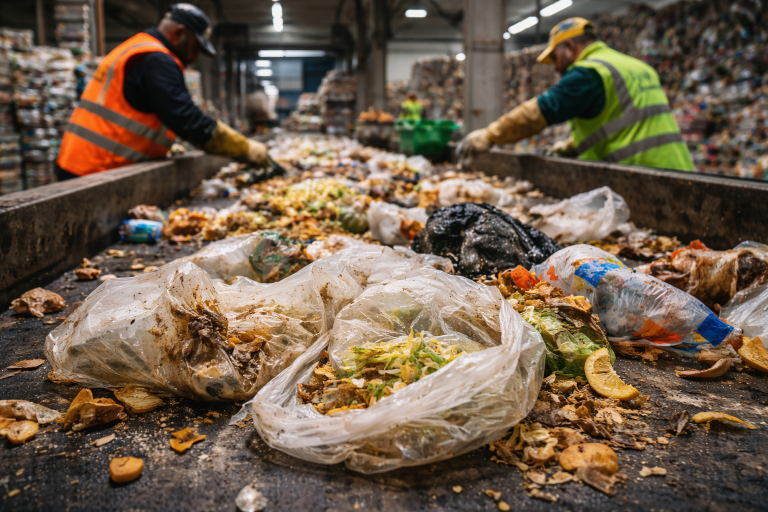
The problem begins with sorting, not just throwing away.
Many people believe that separating plastic from other waste is enough. But the reality inside recycling facilities is different. Plastic contaminated with food scraps, oil, or liquids is likely to be rejected or discarded immediately, because washing and cleaning large volumes drives costs up and makes processing commercially unviable. As a result, even plastic bags that people carefully set aside can still end up in landfills.
Moreover, bags and plastic films have another built-in challenge that recycling systems have long tried to avoid: they are extremely light. No matter how much you collect, the weight is still minimal, unlike plastic bottles or metals where higher volume directly translates into higher value. This is why informal collectors and scrap buyers often avoid plastic bags. The labor and time required are not worth the return. Plastic bags therefore drop out of the recycling chain from the very beginning.
When E-commerce grows fast, plastic waste follows.
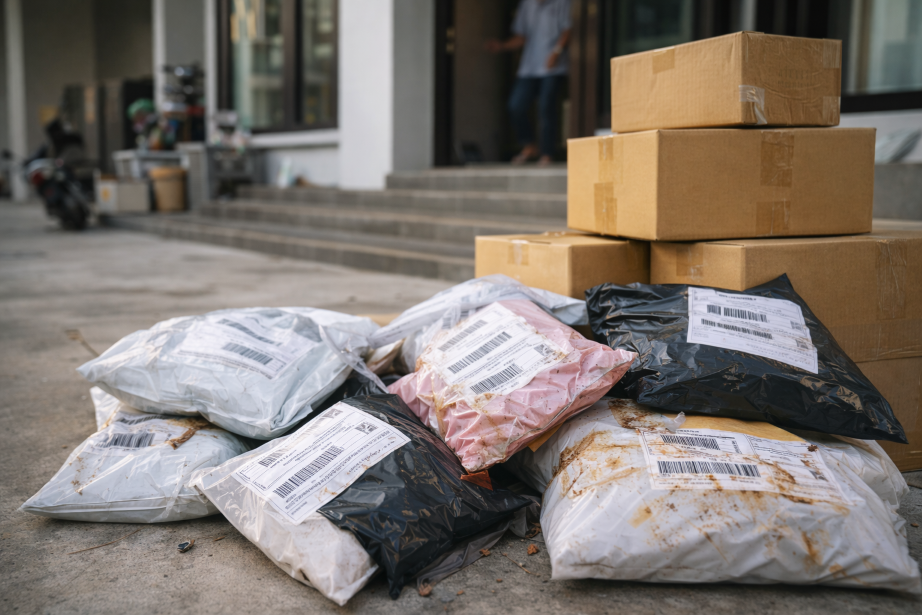
Thailand’s online retail market has expanded rapidly. In 2024, the e commerce market grew 14 percent, reaching a value of around THB 1.1 trillion. That growth comes with an unavoidable by product: plastic mailers, which have become a massive waste stream from the constant flow of parcels delivered to homes.
In principle, plastic mailers are made from recyclable plastic film. The problem is that they are often covered with paper stickers and strong adhesives, which are hard to remove. They are usually sent to recycling with the labels still attached. Paper and glue contamination reduces the quality of recycled plastic pellets, limiting how they can be used. In the end, mailers that many people intended to recycle become contaminated materials in the eyes of recycling plants and are ultimately rejected.
TPBI recognizes that this issue cannot be solved simply by waiting for people to recycle correctly without a system that supports them. That is why TPBI launched the WON Project, applying circular economic principles to create a dedicated pathway specifically for plastic films. The project has established over 400 drop off points nationwide for clean plastic bags and plastic film packaging.
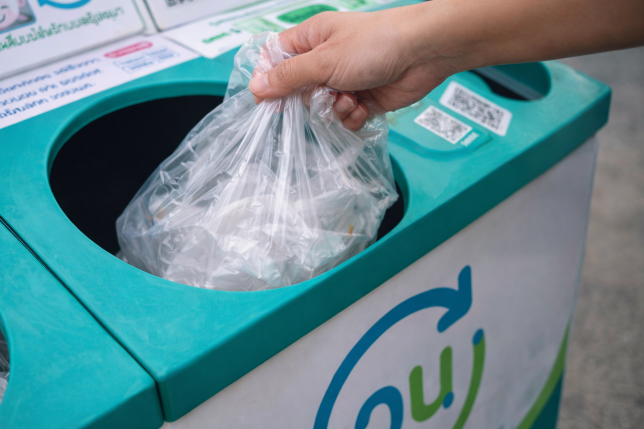
The WON Project also collaborates with a wide range of partners, including shopping centers, retailers, educational institutions, and public and private organizations, to communicate, expand, and scale clean plastic film collection points across the country. The goal is to separate plastic films from the general waste stream before they enter landfill pathways, and to return them into manufacturing processes to be transformed into new plastic products.
A key condition the WON Project consistently emphasizes is simple but critical. Plastic must be clean and dry, free from food residue or liquids, and must not contain paper labels or adhesive. These are the baseline requirements that allow a piece of plastic to truly circulate back into use.
A small piece of waste, multiplied into a national scale challenge. Plastic bags may look like insignificant waste. But when Thais use an average of 3,000 plastic bags per person per year, or more than 200 billion bags per year nationwide, this small waste becomes a big national challenge that requires understanding and collective action.
Rinsing plastic clean, removing labels, and sending it to the correct drop off point is not difficult. But it is a small step that makes a real difference in reducing plastic waste over the long term. If you would like to be part of the solution, whether by dropping off clean plastic film or becoming a collection point partner in your area, please contact the WON Project here: [Link]: TPBI PUBLIC COMPANY LIMITED. - WON Project
References
- SET Sustainable Capital Market Development
- Office of Natural Resources and Environmental Policy and Planning (ONEP)
- Thai PBS
- Parliamentary Library
- The Cloud Magazine
 Sign up for Newsletter :